

Is it possible that the Universe could rotate around the Earth? Standard-Waves, Plancktons and Newton's inertial mass?
How could the Universe possibly rotate around an immobile Earth! This is a good and common sense objection. There are scientific reasons (never discussed), why this could occur. Read on brave one.

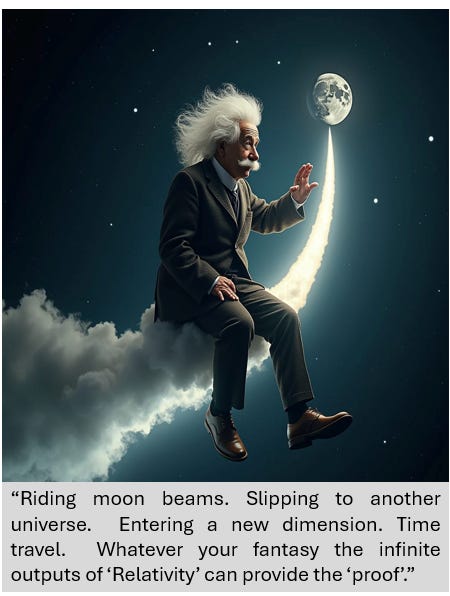
“I also fear for the soul of the scientific enterprise if we persist in ignoring the elephant in the room. Are we scientists able to follow the scientific method and admit we’re wrong when the data say so? Or are we just middling priests of some Cold Dark Religion ushering in another millennium of epicycles.”
Physicist Stacy McGaugh (criticising the phantasms of dark energy, dark matter)
Aristotle’s physics and naturalism dominated ‘Western’ philosophy and science for some 1800 years. A millennium of Relativity philosophy and non-science has been upon us for a while, its roots dating back to Galileo. The apostle of the cheap tricks and magical imagery, that all must bow to, is of course Einstein or Einstotle, who merged maths with philosophy (Einstein + Aristotle).
But what if all these little wizards and the maths-philosopher Einstotle are wrong?
The problem statement: How could the Universe rotate around the Earth?
An impossibility declaims the bien pensant! Absurd declare the priests of physics and astronomy! Only a relic worshipping, toothless, shoeless, medieval peasant, who has never read Copernicus or Galileo believes that, bellows Professor Quack Quack!
But…what if this is indeed possible? Is there scientific justification for such a belief? Sadly, for the Relativists, there is plenty of justification for such a model. No one is ever taught such things of course. Philosophies, ‘consensus’, money, paradigms, political control, power, prestige, endless degrees and all that.
Common sense objections
The main argument to support the Heliocentric view of cosmology is that of ‘simplicity’. In reality the Copernican model, even amended, has more epicycles and retrograde motions than the Ptolemaic. It is not ‘simpler’. But let’s bow our heads to ‘The Science’ and accept this false claim at face value.
How then could the universe rotate around an immobile Earth? Wouldn’t that involve a complexity and extremity of forces that would be impossible to physically realise? As Copernicus the confused declared when he merged various strands of ancient Greek Sun worship with medieval observations, surely it is more logical that the Earth, which is a small orb in the vast cosmos, moves around the firmament of God’s creation, and not the other way around?
This is a good argument, but inaccurate, which we will show below.
This common contention usually abridges or misses important scientific and physical facts and processes. This means that looking at the rotation of the Earth and the cosmos is not that straightforward and heliocentricity brings its own baggage of complexity.
Physics and Plancktons
If one is a geo-centrist or a neo-Tychonist, the rotation of the universe is an integral facet of your model. There are a few objections to such a model which need to be answered. First, as given on other posts in this substack, the universe is composed of an infinitesimal substance on the Planck scale, which Quantum Mechanics postulates is at least 10120 more dense and energetic than ordinary matter (Misner et al, 1973, ‘Gravitation’)!
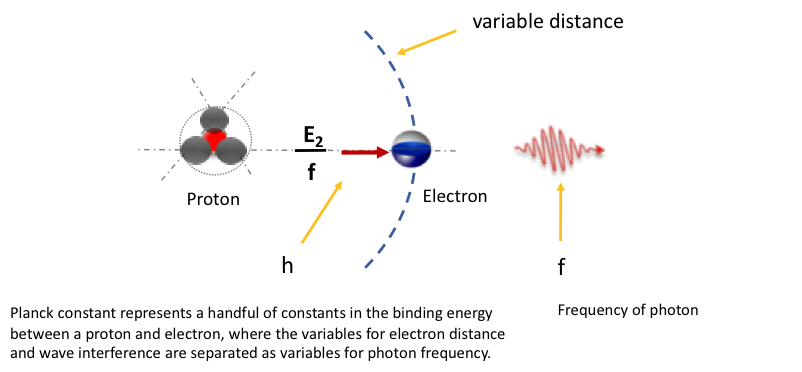
This is called the aether or the materiality of space. It disproves Relativity. This is one reason why QM has proven to be so important (until it delves into fantasy worlds of multiple states and positrons or micro-nano particles popping in and out of existence).
To wit: Given the reality of a material-Planck-aether, the universe could spin thousands of times faster than it does presently in about 24 hours and still remain stable! The author is not saying that the universe does behave in such a manner but given the reality of the aether and Planck particles, it is certainly possible. This is never discussed or taught. This now seeds some doubts about the Copernican’s objection to an immobile Earth.
Let’s propose a second issue.
If the universe is rotating around the Earth, there must be a counterbalance to the inward pressure of gravity. This is a commonsense objection to aspects of the Tychonic model. Specifically, within a rotation period of 24 hours, we would expect that all the material in the universe would start to collapse inward towards the Earth (if we assume that the universe is rotating around the Earth which sits at the center of the cosmos).
Newton and Einstein both understood and discussed this very problem. Newton attempted to answer this problem through opting for an infinite universe and a center of inertial mass (more below). Einstein created his infamous ‘cosmological constant’ to grant a ‘steady state’ in which unknown forces prevented this contraction to a singularity or black hole. Newton was far closer to the truth.
As we discussed on other posts, Relativity can raise no objections against geo-or geo-helio-centrism’s rotating universe, given that the maths within Relativity cannot parse a difference between a rotating Earth among fixed stars, or stars that revolve around a fixed Earth. The two are ‘relativistically’ equivalent.
Physicist and Relativity apologist Martin Gardner admits:
“One could just as legitimately assume the Earth to be fixed and the entire universe, with its great spherical cloud of black-body radiation, to be moving. The equations are the same. Indeed, from the standpoint of relativity the choice of reference frame is arbitrary. Naturally, it is simpler to assume the universe is fixed and the Earth moving than the other way around, but the two ways of talking about the Earth’s relative motion are two ways of saying the same thing…” (The Relativity Explosion, pp. 184-185)
Gardner’s assumption on heliocentric-simplicity is wrong. These guys ignore within Copernicanism; the complexity of elliptical movements, its supposed permanency, the absolute and massive velocities of planets and galaxies through the universe, rotational issues, the reality that Newtonian and Einsteinian maths cannot explain complex systems of more than a few orbs, the use of constants such as dark matter and energy and the fiction, and the ridiculous magic-show of merged space-time and time dilation.
There is nothing ‘simple’ about Copernicanism and its dense theology.
Tidal forces
Let’s propose a third objection, namely a fixed Earth in a rotating universe must suffer from the ‘tidal force’ of the latter and must eventually be coerced to ‘turn’ at the same speed. This is a good objection. By analogy, a rotating whirlpool of water would seem to require whatever was placed in the center to rotate with the water (Wu, 2019).
Galileo raised the same issue in his famous Dialogue of the Two Great World Systems. Galileo took the part of Salviati the Sun-worshipper and presented a conundrum to the geocentrists:
Question: “…if the heavens really revolved with enough force to propel the vast bodies of the innumerable stars, how could the puny Earth resist the tide of all that turning?”
Salviati replies for the Copernicans: “We encounter no such objections if we give the motion to the Earth, a small and trifling body in comparison with the universe, and hence unable to do it any violence.” (Sobel, p. 156.)
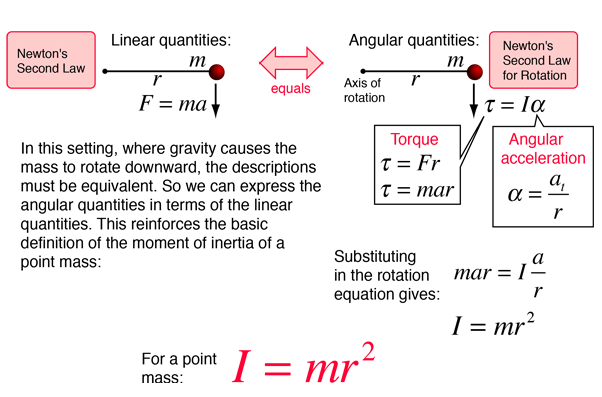
Galileo operated before the discovery of gravity and its center of mass. According to Newton’s laws of motion, the center of mass will experience no inertial forces (Feynman lectures). Although the center of mass is an infinitesimal point, we can safely argue that compared to the size of the universe, the Earth can well be considered such an infinitesimal point.
In other words, Salviati’s argument is turned upside down. Now he and the Copernicans have a problem. Based on accepted Newtonian physics and his 2nd law, the 2 objections of tidal forces and univeral masses falling to the Earth can be dealt with.
Standing waves
One can press on from the above. Another way to posit how the Earth could be in the center of the universe, yet not rotating with the tidal forces of the entire cosmos, is to understand that the whole universe is a standing or stationary wave, that is, a wave that does not move forward or backward but oscillates in place. This is also rarely taught or discussed but is a fundamental and physical fact and embedded in quantum mechanics.
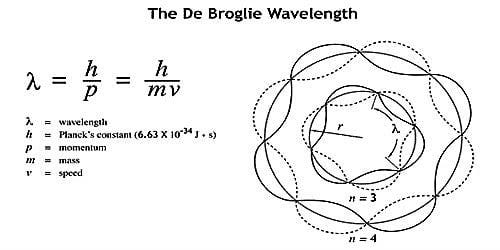
Within quantum mechanics, there are 2 different kinds of quantum waves associated with mass. The first is the ‘Compton wave’ (or scattered radiation effect, as with an x-ray), which is a quantum mechanical property of an object that is stationary. The second is the ‘de Broglie wave’ (where electrons and particles behave in waves), which is a quantum mechanical property of an object that is moving.
The Compton wavelength (λ) is equal to h/mc, where h is Planck’s constant, m is the rest mass of the object, and c is the terrestrial speed of light. We can take this and create a calculation of the de Broglie wavelength for an object in motion.
E = mh0ν P = mh0/λ and λ = mh0/P
Where m is the mass, E is the energy and P is the momentum of the spinning particle. h0 is the General Planck Constant and λ is the wavelength of De Broglie Matter Wave of the particle (Wu, 2019).
Take an electron. The Compton wavelength for a negatively charged electron is 2.426 × 10⁻¹² meters. If we consider a far larger object the size and weight of a baseball, the Compton wavelength at rest it is 1.58 × 10⁻²⁷ meters. The de Broglie wavelength for the same baseball moving at 30 meters/second is 1.58 × 10⁻³⁴ meters (de Broglie, Wu, 2017).
In essence, based on de Broglie wave calculations, the bigger the object the smaller the wavelength.
We can apply these calculations to the universe by first understanding that, in the geo-or geo-helio-centric system, the universe’s center of mass exactly coincides with the Earth’s center of mass. If this is true, it means that the universe would function as a standing wave with the diameter of the universe being one Compton wavelength. If we apply the requisite maths to the Earth’s mass in relation to the universe we calculate the following:
m = 3.86 × 10-46 grams for the effective mass of the Earth, this is greater than the mass for the universe which is 10-66 grams
The Earth might possess a far greater mass than the universe.
Magnitudes and Masses
If we use a quantum wavelength, the perfect-size-for-life-Earth is twenty (20) orders of magnitude greater in mass than the whole universe (i.e., 10-46 grams > 10-66 grams). This difference is quite remarkable since the universe, as estimated by current cosmology, has a diameter of 93 billion light-years. But even if the universe were only one million light years in diameter, its effective mass would be 2.32 × 10–59 grams, or thirteen (13) orders of magnitude lighter than the Earth (Selbrede, p. 11).
If we compare the mass of the universe to the quantum wavelength mass of the Earth, it is analogous to a comparison of a 1-pound ball to a 10 trillion-pound ball. Which is easier to move? Obviously, the universe is much easier to move than the Earth. This is counter-intuitive. In fact, since the Earth’s effective mass is so exorbitantly greater than the universe, it would be impossible to move the Earth out of its place.
Further, if there is any movement or vibration on the Earth, such as an earthquake, this will be absorbed by the universe and spread out over its millions or billions of light- year volume, effectively dissipating all the energy. The only effect on the Earth is perhaps a few fissures on its surface, but the Earth itself would not be able to move due to its extreme effective mass. To the modern mind, this seems crazy. Let’s look then at a simple problem for heliocentricity in the context of the above.
Heliocentricity and rotation problems
While geo-or geo-helio-centrism has the non-moveability of the center of mass to support its position, heliocentrism now has the opposite problem. For the same reason that one might question whether the Earth would be forced to rotate with the rotation of the universe, one can also question why, in the heliocentric system, the Earth maintains a sidereal rate of 23 hours, 56 minutes and 4 seconds, each and every day, without fail for as long as records have been kept (barring very small millisecond variations).
Why doesn’t the Earth’s rotation rate slow down as it moves against a stationary universe? This question is valid and never answered by Copernicans.
This is a major problem for heliocentricity. We know that the rotation rate of some of the planets has decreased significantly over a short period of time. Venus, for example, known and observed only since around 1500 B.C., has slowed its rotation rate by 6.5 minutes just in the last decade. Venus also spins ‘the wrong way’, which has never been resolved. Saturn also suffers from a reduced rotation. Mars’ rotation might be increasing. We could assume that all planets have a declining rotational rate, including our Earth, which might be experiencing a very small velocity decline in its rotation.
What is the cause of the decrease in planetary rotational velocity?
‘The science’ has no answers.
Why? Premised on Einstotle’s Relativity, space is a ‘vacuum’ with ‘no ponderable’ materiality (this is junk science of course, but suffuses astrophysics). Space can therefore have no impact on a planet’s rotation or what is termed ‘the angular momentum’.
Remember that the long-age claims of the Earth and the cosmos logically insinuate that orbital patterns, precessions and rotational velocities should not change - ever. One the orb starts spinning it will never stop. Once the orb translates its movement around a star it will never stop (though no one can explain why such orbital patterns last ‘billions of years’ or how they the orb, or their pattern of movement were formed in the first place).
‘The Science’ claims that there is no ‘friction’ or force within the ‘vacuum’ of nothingness to enact changes, or namely the law of inertia. Yet contradictorily General Relativists preach that the ‘vacuum’ is really a ‘gravitational wave’ without considering the provenance of gravity, nor impact on planets. This contradiction yet again renders Relativity to be absurd.
If planetary rotation velocity is slowing down, there is no possibility that the cosmos, nor the Earth, are ‘billions’ of years in age. None.
Further, as we outlined above, there is the issue of why huge earthquakes and tsunamis on Earth only cause small millisecond variations in the Earth’s rotation, but even then, it always averages out to our present sidereal rate, without fail. Why then do other planets, without similar atmospheres and complex climate systems that we have on Earth, vary significantly in their rotation rate, but the Earth apparently, has never done so? Copernicans are now distinctly on the defensive. Something in space is causing the rotational velocity of planets to change and slow.
If the Earth experienced a Venus-like 6.5-minute decrease in its rotation rate it would heat up very fast and most of the land would be flooded by melting polar caps. Our comfortable world would end rather quickly.
Let us suspend our modern philosophical-belief system and just work with the idea that the Earth could be in the center of the universe and that it does not rotate with the tidal forces of the entire cosmos. We now need to consider the reality that the whole universe might be in essence, a standing or stationary wave. This means that it oscillates in place. If this is true, the absolute quantum wave mass of the Earth is far greater than that of the universe given that the Earth, pace Newton, is the central inertial mass point. There is no scientific reason why this theory should be rejected outright.
Bottom Line
In building complex IT systems, the principle of ‘simplicity’ is very important. There are many ways to build systems, the best solution is usually the simplest, given that a ‘simpler system’ which satisfies requirements and objectives, is easier to design, document, understand, manage and if necessary, to extend. Physics and science are no different in this regard.
Physically and mathematically one can use design simplicity and physics to ‘prove’ that the smaller mass of the universe could rotate around the Earth.
If the universe oscillates as a single wave, in place, then the absolute quantum wave mass of the Earth would be far greater than that of the universe. This would mean that our Earth, pace Newtonianism, is the central inertial mass point of the universe and the lesser mass of the cosmos would rotate around the Earth.
Supporting this supposition is the fact that the aether, built on Plancktons, plasma and electric-energy exists and exerts an enormous quantum level-force and material impact on planets. We can see this in the rather dramatic decrease in the rotational velocity of Venus just in the past decade or two. If we apply quantum mechanics and cosmological observational evidence on planetary rotational declines, we have a series of problems that undermine heliocentricity.
In fact, if the Earth had experienced the same rotational loss as Venus, we would return to Velikovsky’s theory of cosmic catastrophe and destruction, premised not on inter-planetary collisions, but on an active cosmological-aether impacting the Earth’s rotation. Uniformitarian, endless-ages-theology would have been obliterated as not only irrelevant, but comprehensibly inane as our entire world was consumed in disaster.
But I am sure everyone was taught this in ‘school’. Open science, debates, critical thinking and all that stuff.
All hail.
next post: The Coriolis and geo-centricity. We take this argument further.
see also Scientism and the Galileo myth.
Sources
Dava Sobel, Galileo’s Daughter, (1999), p. 156
Martin Selbrede (1994), “Geocentricity’s Critics Refuse to Do Their Homework,” The Chalcedon Report, p. 11
C. Misner, J. Thorne and K. Wheeler (1973), “Gravitation”, pp. 1110-1120, Princeton Univ. Press.
M. Planck (1900b). Translated D. Haar, D. (1967). "On the Theory of the Energy Distribution Law of the Normal Spectrum" (PDF). The Old Quantum Theory. Pergamon Press. p. 82
Louis de Broglie (1927). "The Reinterpretation of Wave Mechanics" Foundations of Physics, Vol. 1 No. 1 (1970).
Edward T. H. Wu. “Vision of Object, Vision of Light, Photon Inertia Transformation and Their Effects on Light Speed and Special, Relativity.” IOSR Journal of Applied Physics (IOSR-JAP), vol. 9, no. 5, 2017, pp. 49–54.
E. T. H. Wu, “Derivations of Planck Constant and de Broglie Matter Waves”, IOSR Journal of Applied Physics (IOSR-JAP) e-ISSN: 2278-4861.Volume 11, Issue 5 Ser. I (Sep. – Oct. 2019), PP 68-72
Good post - thanks. Safe to say we really have no idea beyond a lot of more or less jargon filled speculations and a few well done experiments that raise more questions than they answer.
It's very simple. If relativity is true and there is no privileged frame of reference, then you can build a geocentric (or lunacentric, or your-post-code-centric) model of the entire solar system, and indeed, the rest of the universe. The maths will be rather more complicated than eg a heliocentric solar system, but it's doable.
And if relativity is not true then we have to go back to the drawing board anyway.